Icing
WING TIP STALL & ASYMMETRIC ROLL
How tapered wing geometry and outboard aileron placement amplify the hazards of asymmetric ice accretion on modern transport aircraft.
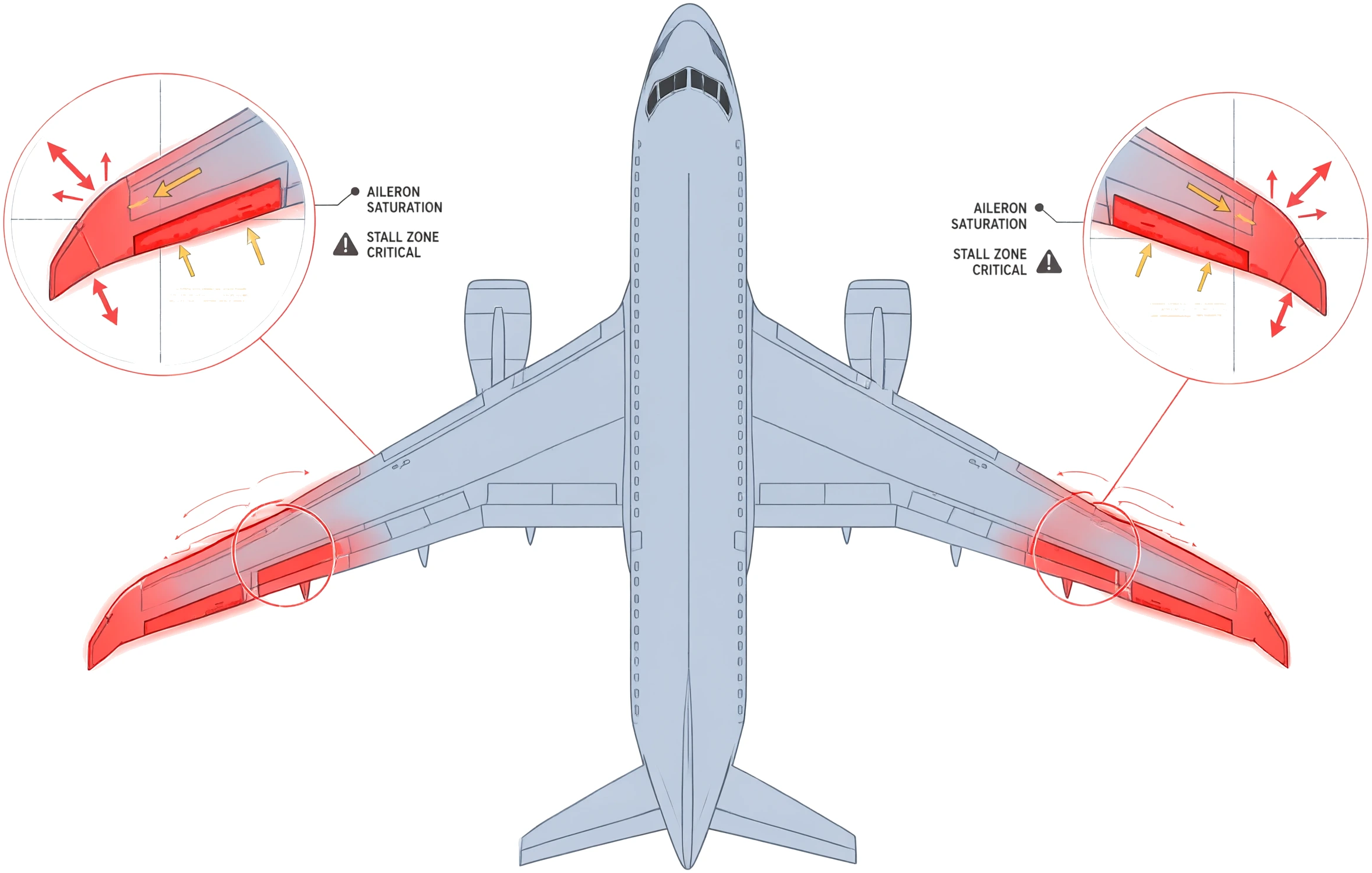
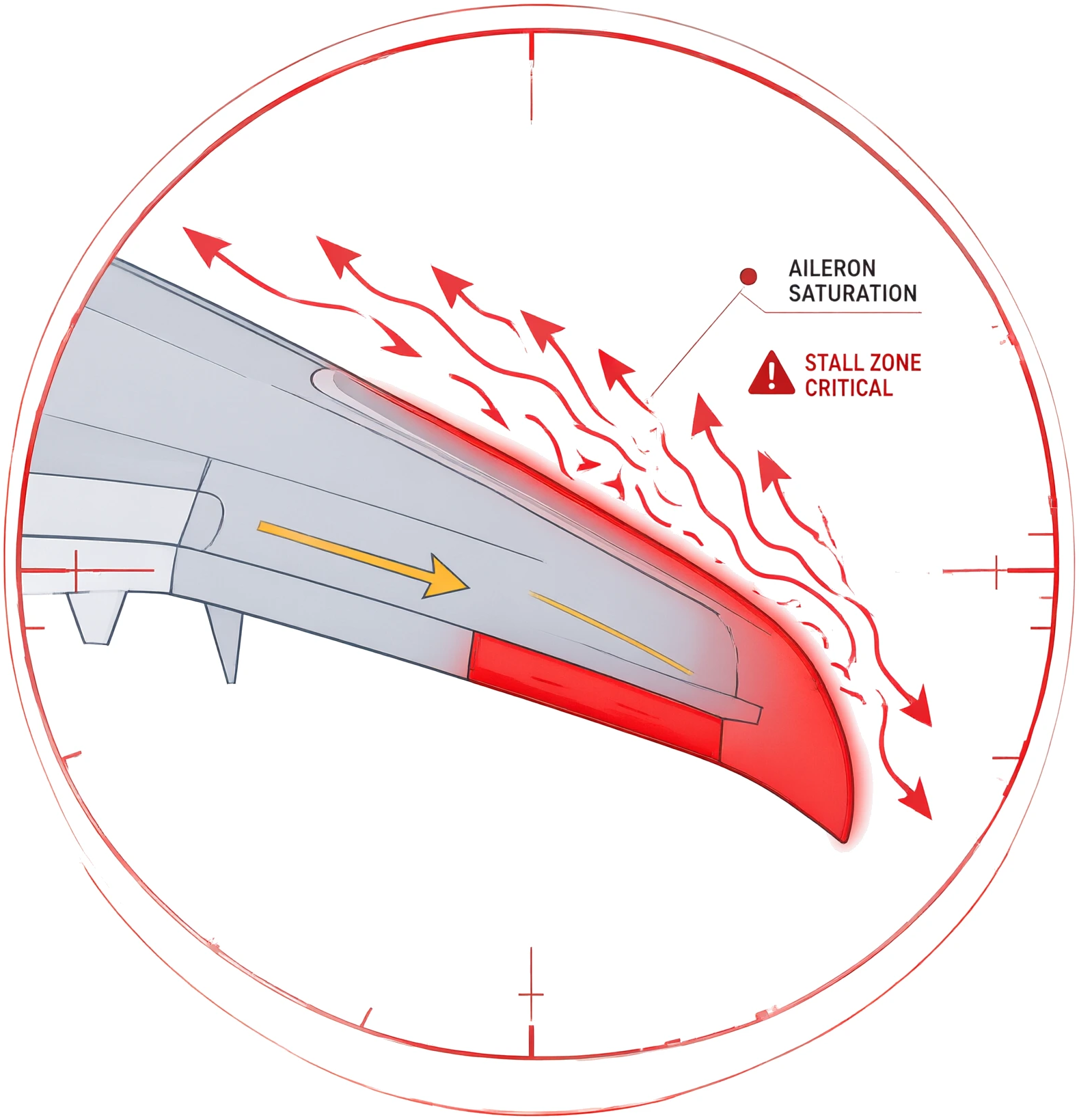
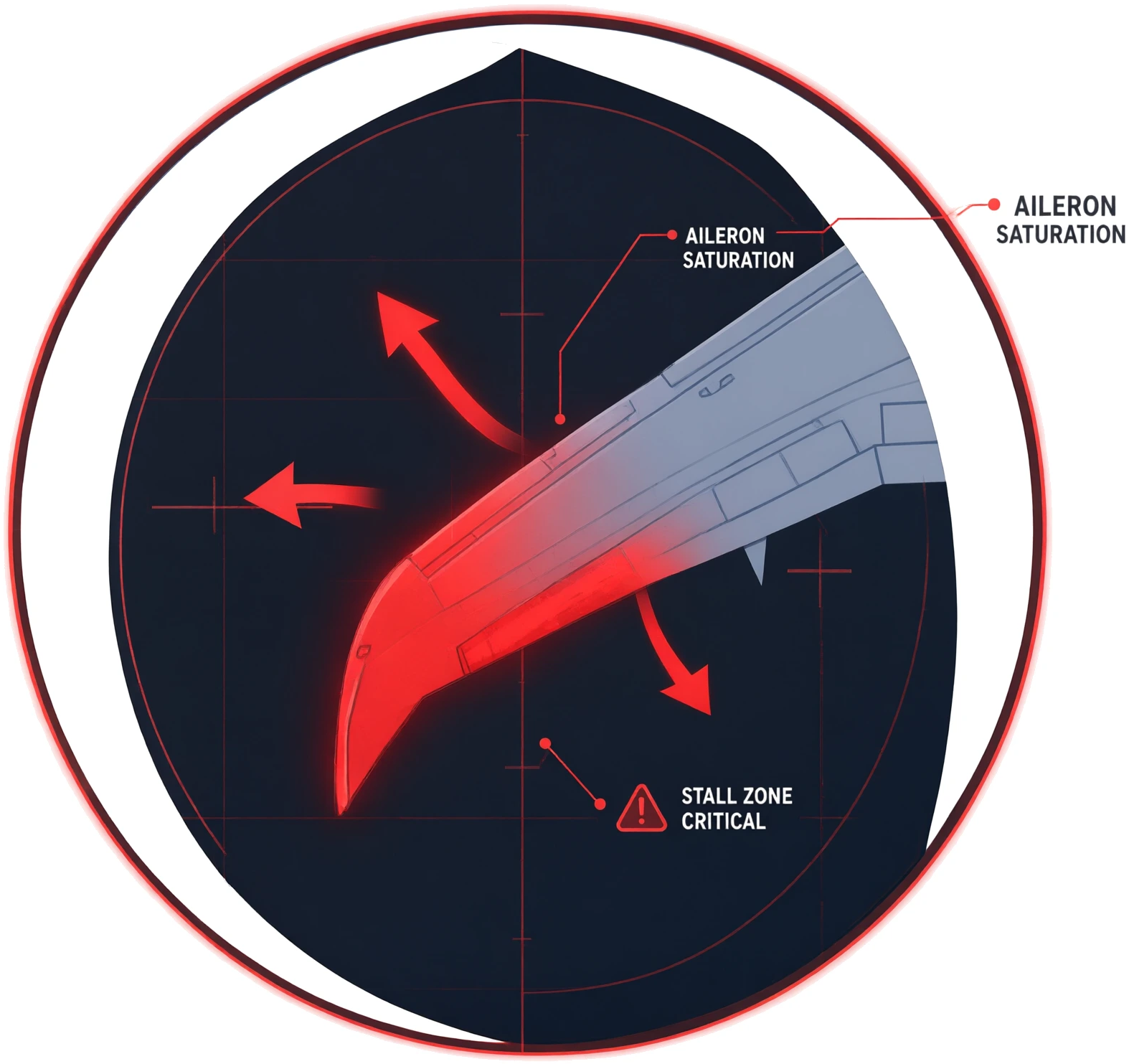
Modern transport aircraft utilize tapered wings. Thinner wingtips collect moisture significantly faster than inboard sections, initiating the stall sequence at the extremities.
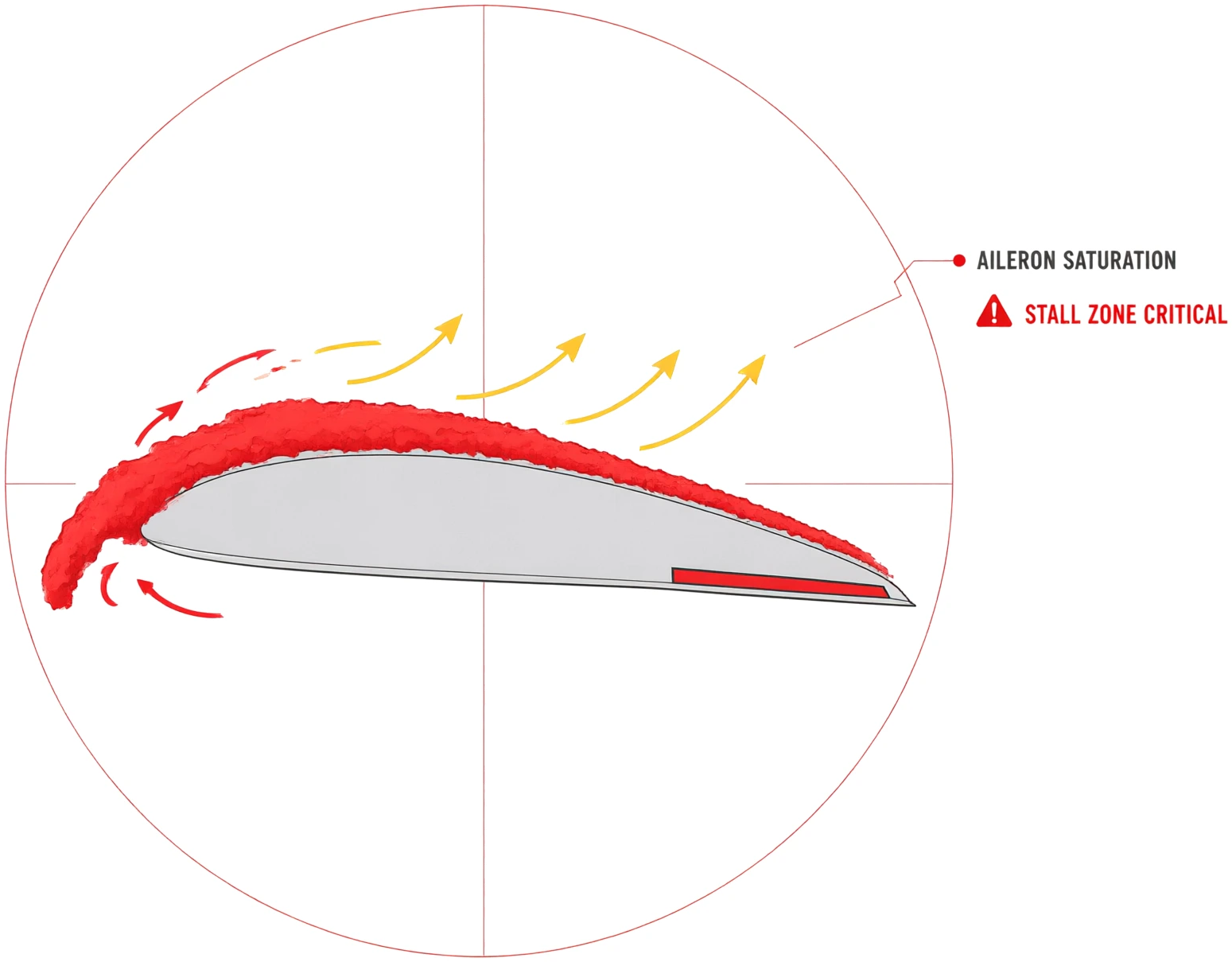 MOISTURE CATCH
RATE: +65% FASTER
MOISTURE CATCH
RATE: +65% FASTER
Because ailerons are placed near the tips for maximum leverage, premature tip-stalls completely destroy lateral control authority exactly when it is most needed.
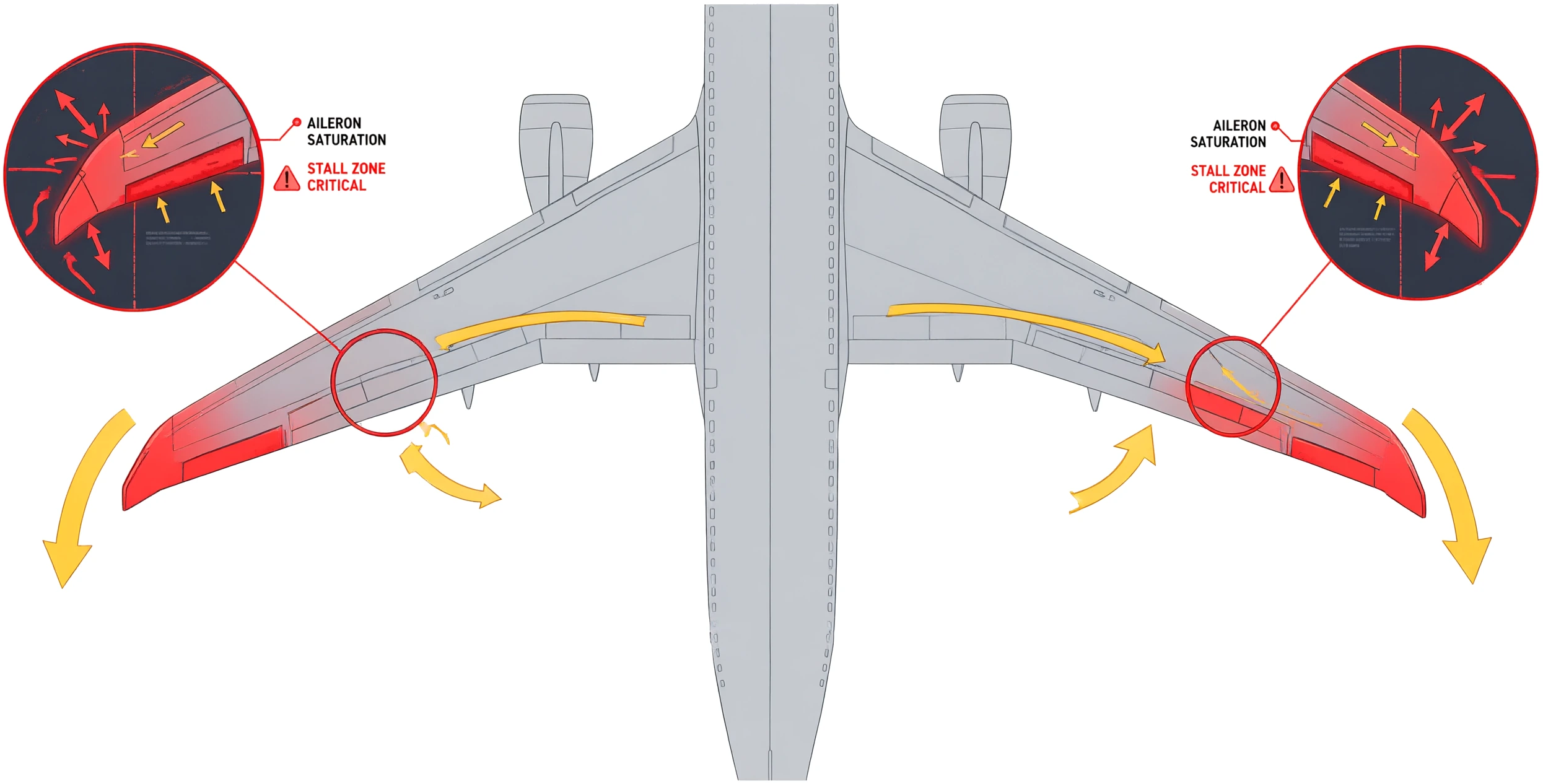 LATERAL
CONTROL LOSS: >90% CRITICAL
LATERAL
CONTROL LOSS: >90% CRITICAL
Uneven ice shedding leads to immediate, violent asymmetric rolling moments that exceed the pilot's recovery margins and the autopilot's envelope.
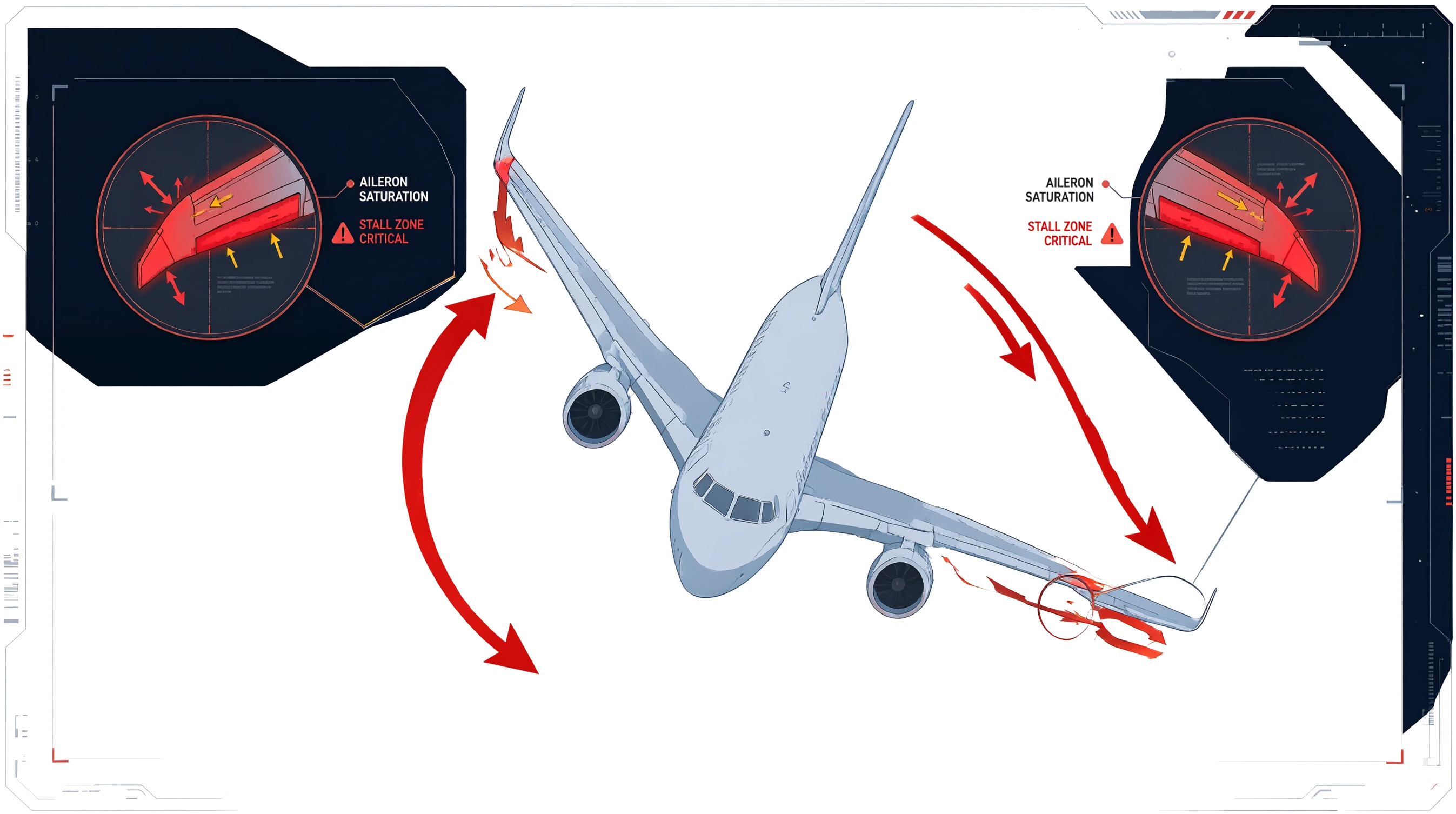 ASYMMETRIC
ROLL MOMENT: UNRECOVERABLE
ASYMMETRIC
ROLL MOMENT: UNRECOVERABLE
Warning: Asymmetric icing induces uncontrollable roll exceeding autopilot & manual recovery margins.